Halotherapy and red light therapy are two of the most talked-about natural wellness treatments right now, and they are sometimes confused with each other or assumed to do the same thing. They do not. This guide compares halotherapy vs red light therapy: how each works, what each targets, and whether it makes sense to try one, the other, or both.
Key Takeaways
- Halotherapy uses dispersed dry salt particles, targeting mainly the respiratory system and skin surface.
- Red light therapy uses specific wavelengths of light to penetrate the skin, targeting cellular energy production and skin repair.
- They work through completely different mechanisms and are not interchangeable, despite both being marketed as natural wellness treatments.
- Some wellness centres offer both, and combining them targets different goals rather than duplicating the same effect.
- Neither is a proven medical treatment, and both work best as complementary, low-risk additions to your routine.
How Halotherapy Works
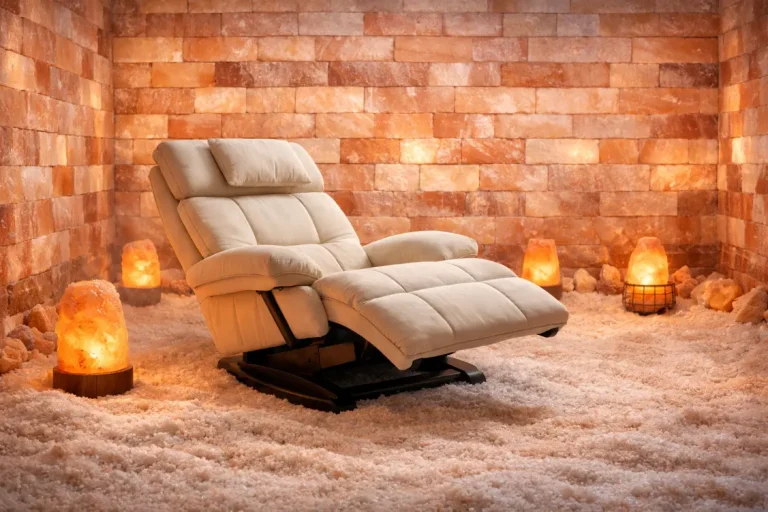
Halotherapy disperses fine, dry salt particles into a room using a halogenerator. You breathe these particles in during a 30-45 minute session, and they also settle on your skin. The mechanism is primarily about the respiratory system, easing congestion and airway inflammation, with skin benefits from direct salt contact as a secondary effect.
How Red Light Therapy Works
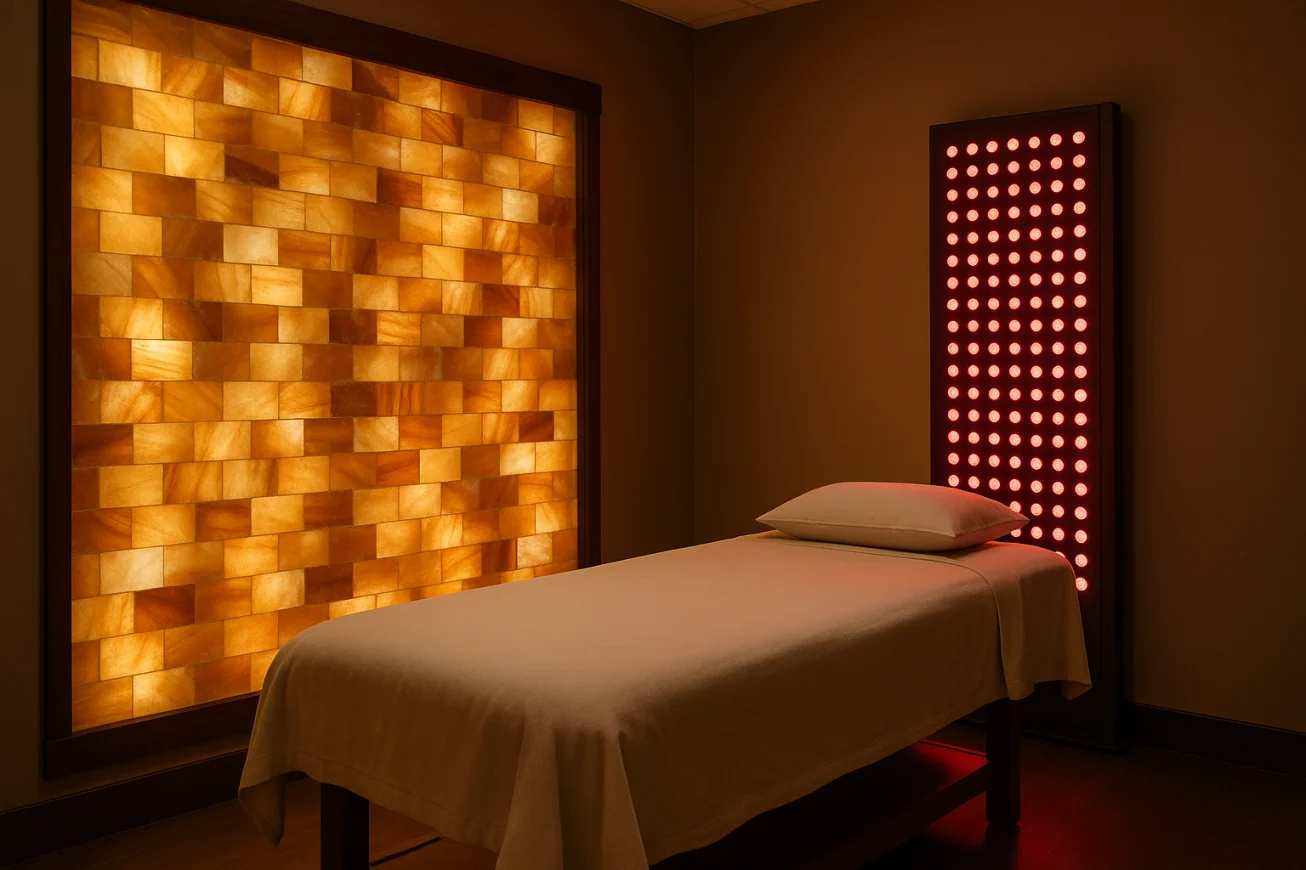
Red light therapy, sometimes offered alongside infrared light therapy, uses specific wavelengths of visible red or near-infrared light directed at the skin. Unlike halotherapy, there is no particle inhalation involved. The light is thought to penetrate the skin and stimulate cellular energy production, which is associated with claims around skin repair, reduced inflammation, and muscle recovery. Our guide comparing infrared light therapy vs red light therapy explains the distinction between these two related light-based treatments in more detail.
| Feature | Halotherapy | Red Light Therapy |
|---|---|---|
| Mechanism | Inhaled and skin-contact salt particles | Light wavelengths absorbed by skin cells |
| Primary target | Respiratory system, airway inflammation | Skin repair, cellular energy, inflammation |
| Typical session | 30-45 minutes, seated in a salt room | 10-20 minutes, facing a light panel |
| Best known for | Breathing, congestion, general relaxation | Skin tone, recovery, localised inflammation |
Can You Combine Them
Yes, and some visitors do use both as part of a broader wellness routine, since they target different systems rather than competing for the same benefit. Halotherapy supports breathing and general relaxation, while red light therapy is more focused on skin and localised recovery. Combining them is not necessary for either to work, but it is not counterproductive either, and some venues offer combination sessions for convenience.
Which Should You Choose
If your main concern is congestion, breathing, or general relaxation, halotherapy is the more directly relevant option. If your main concern is skin appearance, localised muscle recovery, or inflammation in a specific area, red light therapy is more targeted to that. Read our guide on how effective salt therapy actually is if you are still deciding which fits your goals better.
Time is the real constraint for most people: 33.9% of inactive adults in Ireland say work leaves them no time to exercise, according to the CSO data in our physical activity statistics for Ireland.
Session Frequency and Practical Considerations
If you decide to try both treatments, it helps to think about how they fit into a realistic weekly or monthly routine rather than trying to do everything at once. Halotherapy sessions typically run 30-45 minutes and are usually booked once or twice a week for visitors chasing consistent respiratory or skin benefits. Red light therapy sessions are shorter, often 10-20 minutes, and some people use them more frequently, even several times a week, since the sessions themselves are quicker and more targeted.
Budget is worth factoring in too. Since the two treatments are priced and booked separately in most venues, combining them regularly adds up faster than committing to just one. A sensible starting point is to try halotherapy alone for a few weeks if your main goal is breathing and relaxation, or red light therapy alone if your main goal is skin and localised recovery, before deciding whether adding the second treatment is worth the extra time and cost for your specific goals.
What to Look for at a Wellness Centre
If you are choosing where to try either treatment, look for a venue that uses purpose-built equipment rather than a repurposed general-use room, since the concentration and consistency of salt particles or light exposure matters for getting a genuine session rather than a token version of either treatment.
It is also worth asking how long the venue has offered the treatment and how their staff are trained to run sessions safely, particularly for red light therapy, where exposure time and distance from the light source affects both safety and any potential benefit. A venue that can answer these questions clearly is generally a better sign than one relying purely on marketing language.
Frequently Asked Questions
Ultimately, the right choice depends on what you are trying to solve. Treat the two as complementary tools in a wellness toolkit rather than direct competitors, and choose based on the specific outcome you care most about right now.
If breathing and relaxation are your main priority, our halotherapy service is the more directly relevant place to start, with room options suited to different needs.
Conclusion
Halotherapy and red light therapy are genuinely different treatments with different mechanisms and different primary targets, despite both being grouped under the broad umbrella of natural wellness therapies. Halotherapy is the more relevant choice for breathing and general relaxation, while red light therapy leans towards skin and localised recovery. Understanding this distinction helps you choose the one, or the combination, that actually matches what you are hoping to achieve.