Last updated: September 2026. Human written and fact checked against each named source.
Roughly one in six Irish adults reports an allergy, the grass pollen season peaks for a fortnight in the middle of June, and Ireland still has no national allergy action plan. This page gathers the most current, verifiable hay fever and allergy statistics for Ireland in one place, drawn from the CSO, the Food Safety Authority of Ireland, Met Éireann, peer-reviewed Irish research and the Oireachtas record. It is written for journalists, students, health writers and anyone who needs a sourced Irish figure on hay fever, allergic rhinitis or food allergy.
Key Allergy Statistics for Ireland at a Glance
- 15.8% of people aged 15 and over reported an allergy other than allergic asthma in the past 12 months, which is roughly one in six adults. Source: CSO Irish Health Survey 2025, table IHS10
- Women report allergies far more often than men, at 19.4% against 12.0%. Source: CSO Irish Health Survey 2025
- Allergy is most common in young adults: 19.4% of 25 to 34 year olds report one, falling to 9.0% of those aged 75 and over. Source: CSO Irish Health Survey 2025
- Hay fever symptoms among Irish 13 and 14 year olds rose from 25% in 1995 to a peak of 31.3% in 2002, then fell back to 25.2% by 2007. Source: Kabir et al., ISAAC Ireland study, International Journal of Environmental Research and Public Health, 2011
- A study of 1,355 Irish children up to the age of two found a food allergy prevalence of 4.5%, with egg (3%), peanut (1.8%) and cow’s milk (0.7%) the most common. Source: Food Safety Authority of Ireland, citing Kelleher et al., 2016
- The FSAI issued 58 allergen alerts in 2024, part of 126 recall warnings that year, up from 71 alerts in total in 2023. Source: FSAI Annual Report, reported July 2025
- Grass pollen season runs from around mid-May with its peak in the middle two weeks of June, after birch pollen peaks in April. Source: Met Éireann
- About 25% of Irish hay fever sufferers are allergic to tree pollen, and up to 30% of the European population has some form of pollen allergy. Source: Met Éireann, Pollen Forecast Explained
- Ireland has no national allergy action plan, confirmed by the Minister for Health in the Dáil in August 2026. Source: Irish Medical Times, August 2026
- Food allergy affects an estimated 3% of the European Union’s roughly 500 million people. Source: FSAI, citing EFSA 2014

How Many People in Ireland Have Allergies
The clearest national measure comes from the CSO’s Irish Health Survey, which asked almost 8,000 people about long-standing conditions in 2025 and published the results in May 2026. It found that 15.8% of people aged 15 and over had experienced allergies, excluding allergic asthma, in the previous 12 months. That is roughly one in six adults, and it makes allergy the second most commonly reported condition in the survey after high blood pressure. Source: CSO Irish Health Survey 2025, table IHS10.
Two patterns stand out. The first is sex: 19.4% of women report an allergy against 12.0% of men, a gap of 7.4 percentage points that holds across every age group, calculated from the same CSO table. The second is age. Allergy peaks in young adulthood and declines steadily thereafter, which is consistent with people either outgrowing childhood allergies or reporting them less as other conditions take over. The table below is compiled from CSO table IHS10.
| Age group | All | Men | Women |
|---|---|---|---|
| 15 to 24 years | 18.2% | 13.2% | 23.0% |
| 25 to 34 years | 19.4% | 15.4% | 23.7% |
| 35 to 44 years | 17.6% | 13.3% | 21.6% |
| 45 to 54 years | 16.0% | 11.8% | 20.0% |
| 55 to 64 years | 14.4% | 9.7% | 18.7% |
| 65 to 74 years | 11.5% | 10.2% | 12.8% |
| 75 years and over | 9.0% | 7.1% | 10.5% |
| All aged 15 and over | 15.8% | 12.0% | 19.4% |
There is a regional spread too. Reported allergy ranges from 12.4% in the HSE Midwest health region to 18.6% in HSE Dublin and South East, with the Dublin and North East region covering Balbriggan at 16.1%, calculated from the same CSO table. Clinical estimates run higher than the survey figure because they count every form of allergy rather than what people volunteer in a household survey. Allergy Ireland, a Dublin allergy clinic, estimates that about 29% of Irish people have an allergy of some kind and that allergic rhinitis alone affects about 26%. Source: Allergy Ireland.
Hay Fever and the Irish Pollen Season
Ireland’s pollen year runs in three overlapping waves. Tree pollen arrives first in spring, led by hazel, alder, birch and oak, with birch pollen peaking in April and oak running from mid-April to mid-May. Grass pollen, the trigger for most Irish hay fever, starts around mid-May and peaks in the middle two weeks of June. Weed pollen follows from late summer into autumn. Source: Met Éireann.
Met Éireann runs a national pollen forecast from spring through September, publishing a three-day outlook with a Low, Moderate or High risk rating for each region. The service is now built on automated laser-based pollen measurement instruments, the first installed on the roof of Met Éireann headquarters in Glasnevin with more deployed around the country, combined with weather observations and a machine learning model. Source: Met Éireann, Pollen Forecast Explained.
Met Éireann also notes that about 25% of Irish hay fever sufferers are allergic to tree pollen and that up to 30% of the European population has some form of pollen allergy. Source: Met Éireann. Pollen matters beyond the sneezing: it is a recognised trigger for asthma attacks, and Ireland has one of the highest asthma rates in the world, a subject covered in our asthma and respiratory statistics for Ireland.
Allergy in Irish Children
The best long-run Irish evidence on childhood hay fever comes from the International Study of Asthma and Allergies in Childhood, which surveyed representative samples of Irish 13 and 14 year olds four times between 1995 and 2007. It found that reported hay fever symptoms rose from 25% in 1995 to 31.3% in 2002, then fell back to 25.2% in 2007. Over the same period, symptoms of severe asthma moved the other way, rising 39% from 12% in 1995 to 15.3% in 2007. Source: Kabir et al., International Journal of Environmental Research and Public Health, 2011. The authors describe the diverging pattern as complex and point to changing environmental factors, improved air quality and the hygiene hypothesis as possible explanations.
Allergic conditions tend to arrive together. Allergy Ireland estimates that about 10% of children and young adults have more than one allergic or atopic disorder, such as food allergy, eczema, asthma and allergic rhinitis in combination, and that up to 40% of people with allergic rhinitis are also asthmatic. Source: Allergy Ireland. Eczema is the most common of those companions in childhood, affecting 1 in 5 Irish children according to the Irish Skin Foundation, a figure we cover alongside psoriasis and skin cancer in our skin conditions statistics for Ireland.
Food Allergy in Ireland
Food allergy is measured less consistently than hay fever, and the Food Safety Authority of Ireland says plainly that Irish data are incomplete and only partly based on medical diagnosis. The best Irish study it cites followed 1,355 children up to the age of two and found an overall food allergy prevalence of 4.5%, with egg the most common at 3%, followed by peanut at 1.8% and cow’s milk at 0.7%. Source: FSAI scientific report, citing Kelleher et al., 2016.
For the wider population, the FSAI works from United Kingdom estimates of 3% to 6% of preschool children and 1% to 2% of older children and adults, noting that Irish prevalence is likely to be very similar, while the European Food Safety Authority puts food allergy and intolerance at about 3% of the European Union’s roughly 500 million people. Many children outgrow milk and egg allergies, but that is much less common for peanut, tree nut, fish or shellfish. Source: FSAI.
Labelling failures are a live risk. The FSAI has run a food allergen alert system since 2009, relaying undeclared allergens to more than 2,000 subscribers by text and email. In 2024 the authority issued 126 recall warnings, made up of 68 food alerts and 58 allergen alerts, against 71 alerts in total the previous year, and logged 796 food incidents. Source: FSAI Annual Report, reported July 2025. Fourteen allergens must be declared by law under the EU Food Information to Consumers Regulation, written into Irish law by statutory instrument in 2014.
Anaphylaxis and the Policy Gap
Food is one of the most common causes of anaphylaxis in Europe, North America, Asia and Australia, with peanuts, tree nuts, milk, eggs, sesame seeds, fish and crustaceans most often implicated, and peanuts the most common cause of severe or fatal food-induced anaphylaxis. Source: FSAI, citing EFSA. Allergy Ireland places anaphylaxis deaths at roughly 1 in 1 to 3 million people per year, most often from medicines, transfusions or insect stings rather than food. Source: Allergy Ireland.
The policy picture is thinner than the clinical one. In August 2026, in response to Dáil questions from three TDs about training, indemnity and adrenaline auto-injectors in schools, the Minister for Health confirmed that no national allergy action plan currently exists in Ireland, while pointing to services already provided within the public health system. The same response noted that community pharmacies are to receive an annual allowance of €525 in recognition of their readiness to administer emergency medicines including adrenaline auto-injectors. Source: Irish Medical Times, 21 August 2026.
Allergy Beyond Hay Fever
Hay fever and food allergy are the two most discussed forms, but allergic reactions show up on the skin just as often. Urticaria, commonly called hives, is a good example: Allergy Ireland estimates that acute urticaria affects about 9% of the population at some point in life, while chronic urticaria has a lifetime prevalence of around 2%. The outlook is generally good, with about 80% of adults going into remission within a year and 96% of children within seven years. Source: Allergy Ireland.
The CSO’s 2025 survey lets you see how allergy sits against the other long-standing conditions it measured. At 15.8% of adults, allergy is reported more often than depression (10.4%) and far more often than asthma (8.7%) or chronic bronchitis, COPD and emphysema combined (2.7%), all calculated from CSO table IHS10. That ranking is worth keeping in mind when allergy is described as a minor complaint: on the CSO’s own numbers it is among the most widespread long-standing conditions in the country, even before the clinic estimates that put the true figure closer to one in three.
Method and Sources
Every figure on this page was checked against its primary source in September 2026. Adult allergy prevalence, and the age, sex and regional breakdowns, come from the CSO Irish Health Survey, Main Results 2025, published May 2026 and read directly from PxStat table IHS10; the sex gap, the regional range and the description of one in six adults are labelled as calculated because we derived them from that table. Childhood hay fever trends come from the peer-reviewed Irish ISAAC analysis by Kabir and colleagues in the International Journal of Environmental Research and Public Health. Food allergy prevalence, allergen law and the anaphylaxis context come from the Food Safety Authority of Ireland’s scientific report on allergens in food, which cites Kelleher et al. 2016 and EFSA. Alert and recall counts come from the FSAI Annual Report as reported by Food Safety News. Pollen season timing and forecasting come from Met Éireann. Clinical prevalence estimates that run higher than the CSO survey are attributed to Allergy Ireland, a specialist clinic, and are presented as clinic estimates rather than official statistics. The policy position comes from the Minister for Health’s August 2026 Dáil replies as reported by the Irish Medical Times. The page will next be reviewed when the CSO publishes its next Irish Health Survey and at the start of the 2027 pollen season. If you think you or your child has an allergy, talk to your GP; this page is a reference resource and not medical advice.
How Salt Cave Paradise Helps
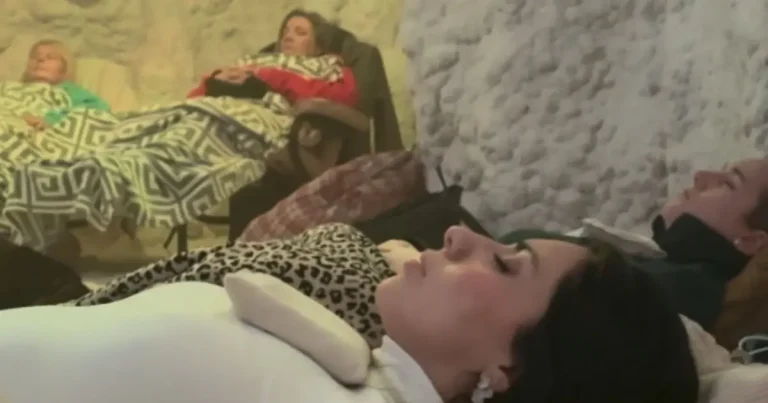
Salt Cave Paradise is a wellness centre in Balbriggan, County Dublin, and hay fever season is one of our busiest times of year, because a salt room is a quiet, pollen-free hour indoors. Halotherapy is a complementary relaxation practice rather than a treatment for allergy, and it is not a substitute for antihistamines, inhalers or an adrenaline auto-injector; anyone managing an allergy or anaphylaxis risk should follow their GP’s advice and carry their prescribed medication. If a calm hour of clean air appeals during pollen season, you can read how visitors with allergies describe a session, see our halotherapy salt rooms, or book a session online.